Executive Summary
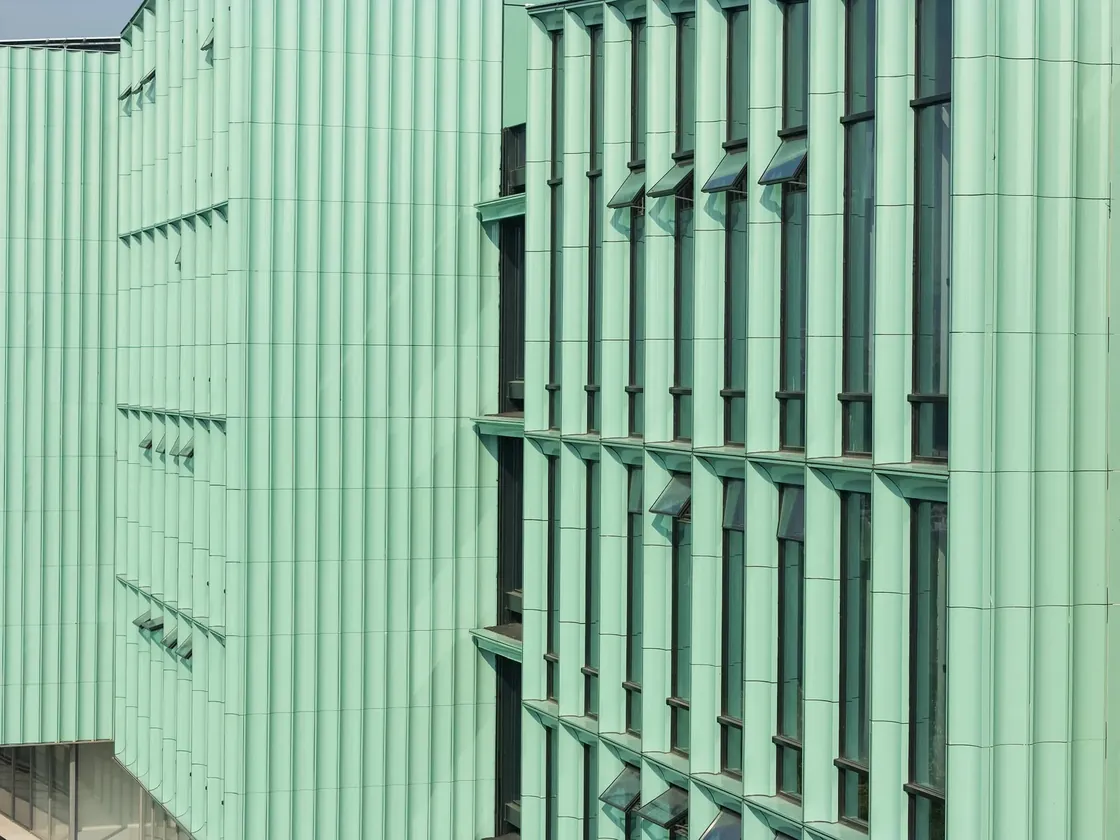
In the acid-rain-prone climate of Hangzhou’s Liangzhu New Town, LOPO China partnered with GOA (Group of Architects) and Greentown China to engineer a bespoke green glazed terracotta cladding solution for the "Haitang Living Room." By achieving a high-density body with a water absorption rate under 3%, LOPO addressed a persistent industry pain point: glaze crazing caused by moisture ingress in high-humidity environments. Through a synergy of custom extrusion molds and five-axis CNC precision machining, the project faithfully translates GOA’s intricate "lattice" design into a built reality, striking a perfect balance between engineering rigor and enduring architectural aesthetics.
 LOPO Custom Glazed Terracotta | Haitang Living Room by GOA
Project Overview
| Project Information | Details |
|---|---|
| Project Name | Haitang Living Room |
| Location | Liangzhu New Town, Hangzhou, China |
| Program | Mixed-use community complex (Library, Dining, Education, Sports) |
| Gross Floor Area | Approx. 17,000 SQM |
| Architect | GOA (Group of Architects) |
| Developer | Greentown China |
| Cladding Material | LOPO Custom Green Glazed Terracotta Panels |
1. Design Philosophy: A Rhythmic Urban Interface
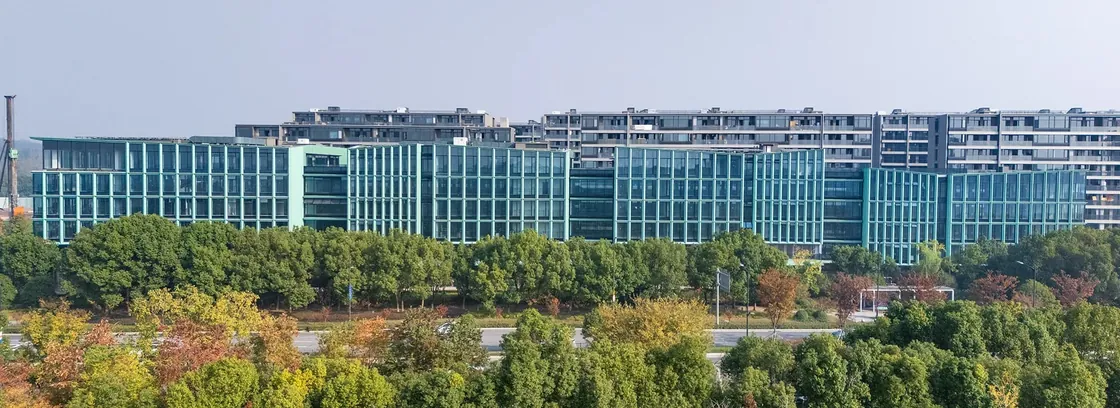
Haitang Living Room is situated within the cultural epicenter of Liangzhu, neighboring the China Academy of Art and the Liangzhu Museum. Conceived as a flagship for Greentown’s "Complete Community" vision, the project faced a central architectural question: How can a 17,000-square-meter complex remain inviting and approachable while housing such diverse public functions?
Breaking Down the Massing
GOA’s response was "unity within diversity." The 170-meter street frontage is articulated as a cluster of distinct yet harmonious volumes. This massing strategy—defined by undulating rooflines and a varied facade—significantly mitigates the visual weight of the building. By reducing the scale at the pedestrian level, the complex becomes an accessible social hub, seamlessly connecting the community with the urban fabric.
Materiality and Cultural Resonance
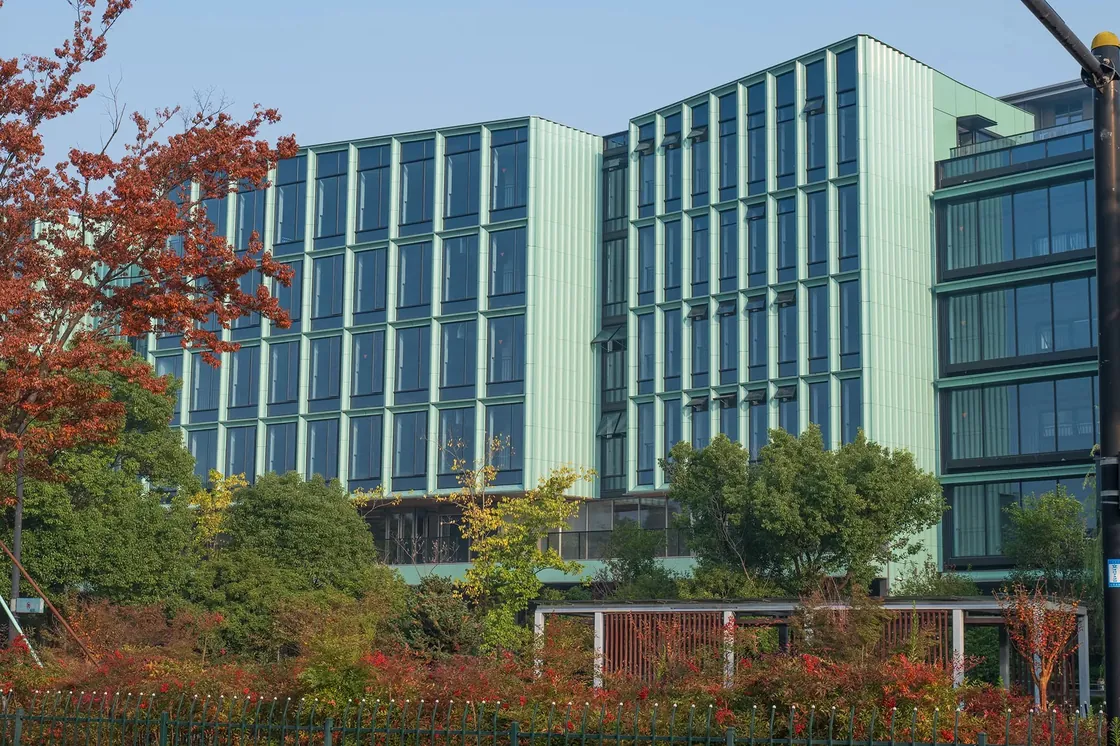
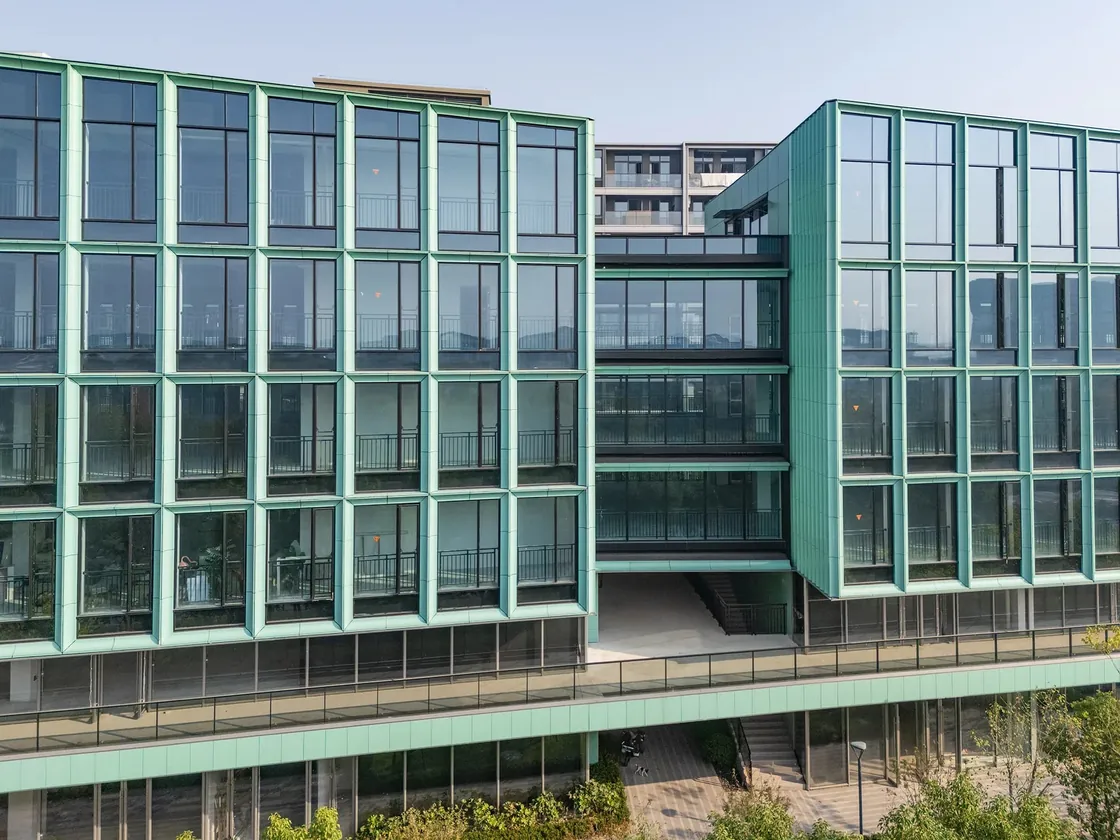
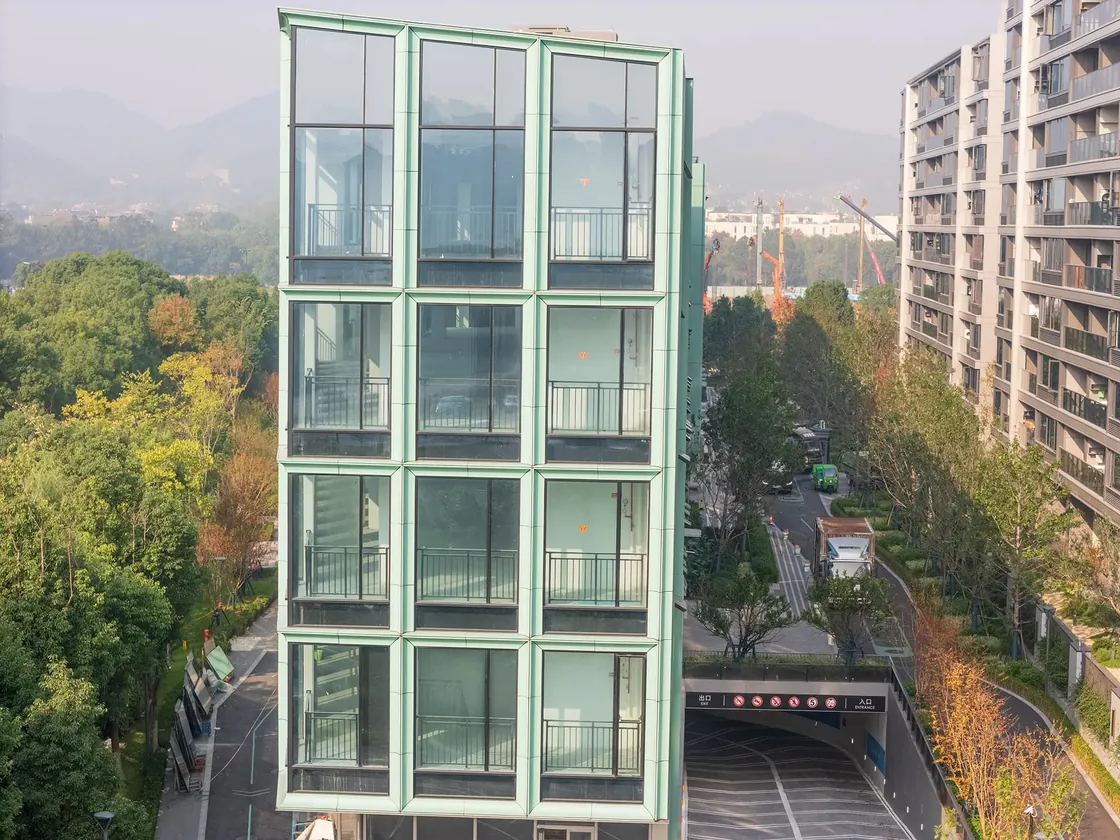
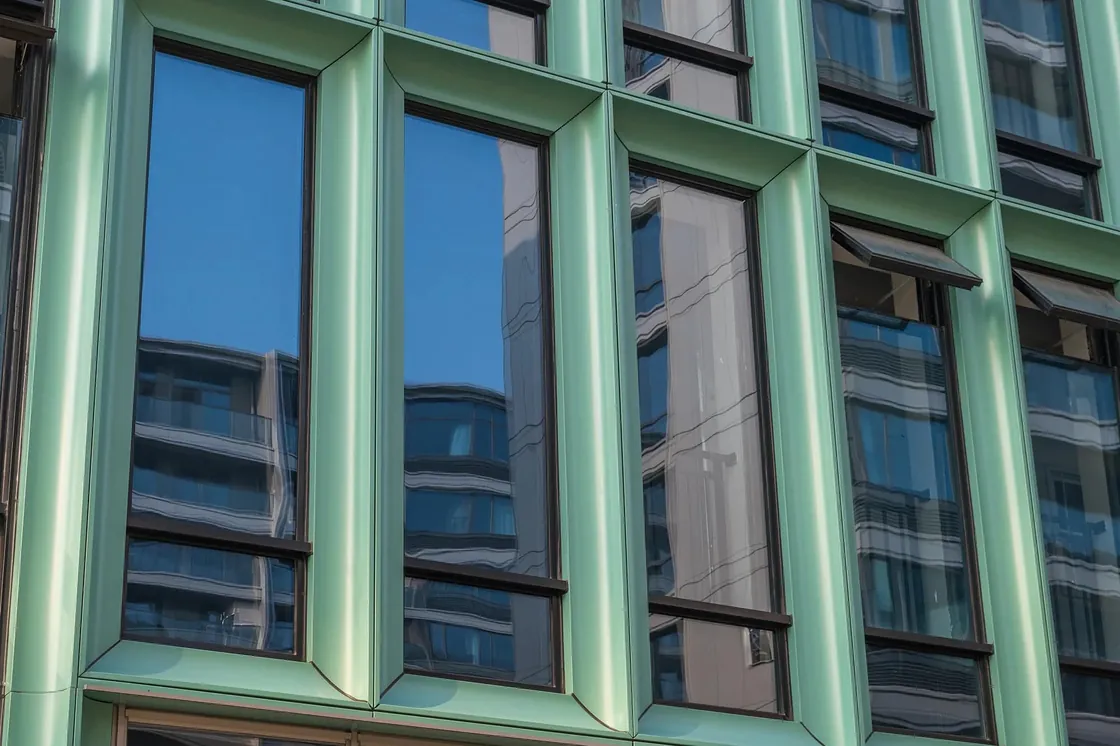
The facade utilizes a "lattice" composition, interweaving green glazed terracotta with transparent glass. The material logic operates on two planes:
Cultural Dimension: The architects sought to evoke the translucent warmth of "Qingyu" (Green Jade), a hallmark of the prehistoric Liangzhu culture. LOPO’s technical team engaged in iterative sampling to fine-tune the "sky-green" glaze, achieving a mineral-rich depth that shifts subtly under changing light. This creates a timeless aesthetic that bridges ancient heritage with modern architectural language.
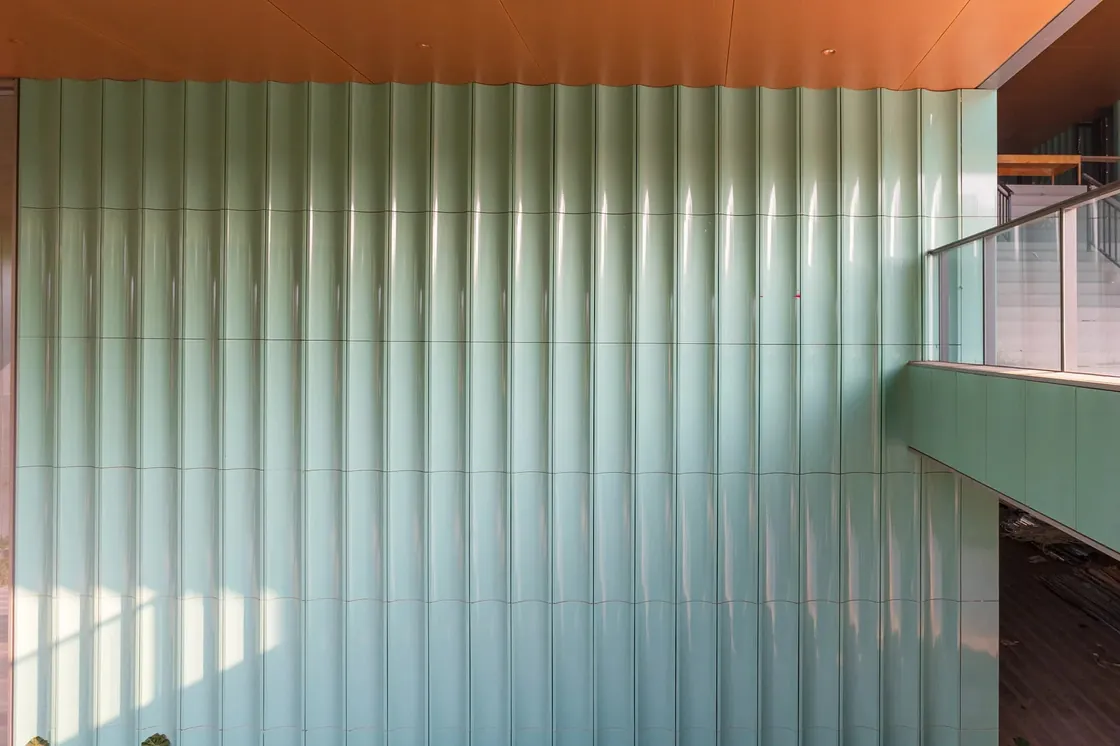
Functional Dimension: The modular grid provides a sense of rhythmic order. Under Hangzhou’s prevailing diffuse light, the subtle reflectivity of the glaze enhances facade legibility, preventing the building from appearing flat or somber on overcast days.
2. Material Engineering: Durability in Acid Rain Climates
The Climatic Challenge
Hangzhou is located within a designated acid rain control zone. The combination of high humidity and acidic precipitation presents a severe threat to building envelopes. For glazed terracotta, this environment typically leads to two failures: glaze dulling due to chemical erosion, and glaze crazing (micro-cracking) caused by the stress differential between the body and the glaze layer.
LOPO’s Solution: Safeguarding the "Liangzhu Green"
To ensure the facade's longevity, LOPO engineered a solution that far exceeds the industry standard:
Densified Body (Root Cause Prevention): By optimizing raw material ratios, the body's water absorption is strictly held below 3%. This high density suppresses moisture expansion—the microscopic deformation caused by water ingress—making the panels immune to the region's relentless wet-dry cycles.
Pre-Stress Principle (Surface Protection): Through precise firing, the glaze layer is maintained in a state of slight compressive stress. This "pre-stress" state significantly enhances crack resistance, ensuring the jade-like finish remains pristine for decades.
3. System Integration: From Digital Vision to Physical Precision
Realizing GOA’s rhythmic facade required LOPO to act as a collaborative engineer rather than a mere supplier. We provided end-to-end technical support, from initial detailing to final installation.
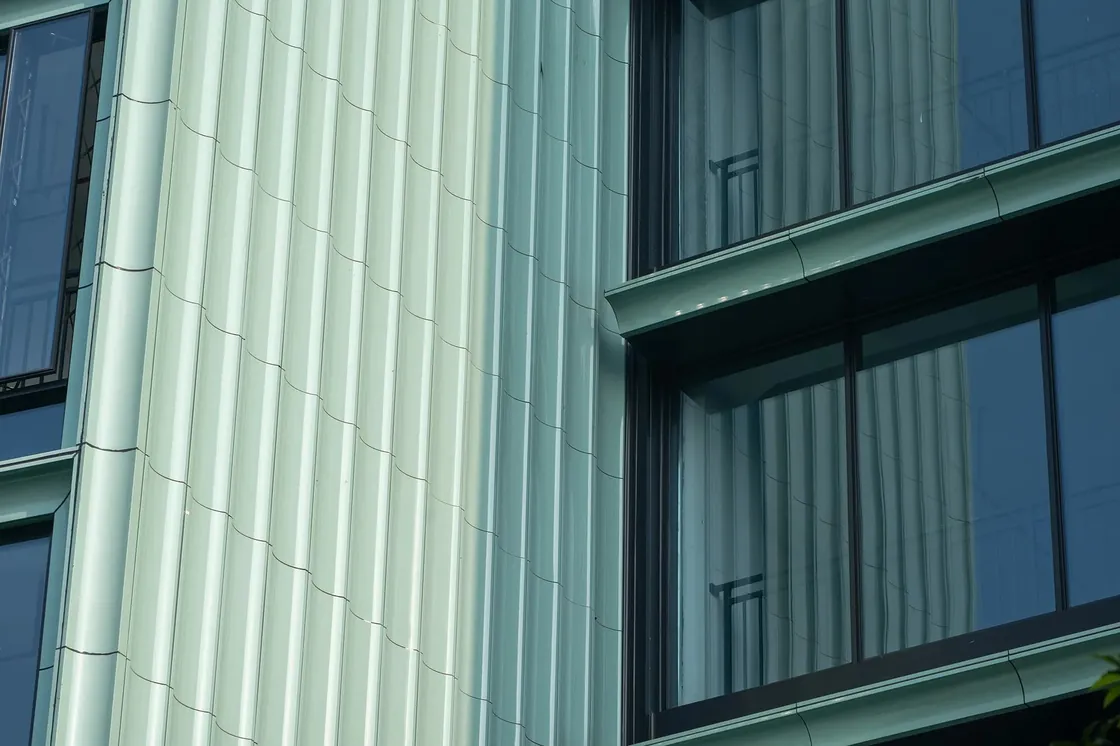
Custom Extrusion (Unified Curvature): LOPO developed bespoke molds to ensure absolute uniformity across all curved profiles. This investment in tooling allowed the facade to flow smoothly, avoiding the "patchwork" look common in lower-precision projects.
5-Axis CNC Machining: Thousands of panels underwent automated CNC processing. This was essential for the 45° mitered joints (Haitang corners), allowing the terracotta to wrap window reveals with a tight, sculptural finish that mimics solid stone.
Visual Grid Alignment (Eliminating Visual Misalignment): To prevent visual "drift" at grid intersections, LOPO's interface connection allows horizontal and vertical lines to align neatly at every node — supporting the architect's geometric vision within the facade engineer's overall system.
4. Conclusion
The Haitang Living Room is a testament to the power of technical collaboration between LOPO China, GOA, and Greentown. It proves that in climatically demanding regions, high-performance glazed terracotta can bridge the gap between ambitious architectural expression and long-term structural durability.